

Why Every Healthcare Brand Needs a Video Strategy in 2026
In today’s dynamic healthcare environment, brands no longer simply rely on traditional media to reach their audiences. With rapid advancements in digital technology and changing consumer behaviors, video marketing, especially healthcare video production, has emerged as an essential tool for healthcare organizations.
Transitioning to the main content, the following sections detail the multifaceted benefits of a healthcare video strategy.
By leveraging insights from peer-reviewed studies and expert industry data, healthcare brands can design video strategies that resonate with patients and drive business growth.
Investing in healthcare video production can significantly enhance patient education and trust, making it a vital component of any healthcare marketing strategy.
Video Content Drives Superior Patient Engagement and Understanding
The utilization of video content in healthcare marketing directly improves patient engagement by transforming complex medical procedures and treatment options into relatable visual narratives. In the first sentence, it is evident that videos simplify complex medical information through visual storytelling, allowing patients to gain a clearer understanding of their conditions and treatment options. Visual content integrates crucial aspects like animation, motion graphics, and live-action demonstrations, which are far more effective than text alone. This phenomenon is supported by research from the Journal of Medical Internet Research (2018), which found that patients retained up to 80% of the information presented in video formats compared to only 20% when receiving written instructions.
Healthcare video production also plays a crucial role in modern marketing, allowing organizations to connect with patients effectively.
Simplify Complex Medical Information With Visual Storytelling
Visual storytelling in healthcare videos reduces cognitive load on patients by breaking down intricate information into digestible segments. By using graphics and motion visuals, healthcare marketers can highlight key aspects of procedures or treatments in an engaging manner.
Improve Patient Education and Treatment Comprehension
Patient education is crucial for successful treatment outcomes; videos provide an interactive platform where patients can see their treatment journey visually. Studies have indicated that patients who watch explanatory videos are more likely to adhere to treatment protocols, as the visual format demystifies the procedures.
Cater to How Modern Patients Prefer to Consume Information
Modern patients are increasingly consuming information through digital devices. Videos are mobile-friendly and accessible via smartphones, tablets, and computers, allowing patients to review medical content at their convenience.
Furthermore, the evolution of healthcare video production techniques allows brands to engage with patients on a deeper level.
Boost Website Dwell Time and Interaction Rates
The integration of video content on healthcare websites significantly boosts dwell time and interaction rates. When patients encounter high-quality videos that address their concerns, they are more likely to remain on the site and interact with additional resources. This increased engagement not only improves website performance from a search engine optimization perspective but also drives conversions. For example, a study published by the Digital Health Journal (2020) found that healthcare websites that featured video content saw a 40% increase in page views and a 25% uplift in appointment bookings compared to websites that relied solely on static content.
Key Takeaways: – Videos simplify complex medical content and enhance comprehension. – Visual storytelling through graphics and animations makes medical information accessible. – Modern patients favor on-demand visual content, leading to longer site engagement. – Increased dwell time and interaction rates can lead to higher conversion and appointment rates.

Build Trust and Credibility Through Authentic Medical Marketing Videos
With the rise of digital media, healthcare video production becomes increasingly important for building brand credibility.
Trust plays a pivotal role in healthcare, and authentic video marketing is a powerful medium to build and sustain this trust. Videos that feature real testimonials, behind-the-scenes facility tours, and genuine physician interviews help humanize the brand and foster a deeper connection with patients.
Showcase Physician Expertise and Humanize Your Medical Staff
Healthcare video production agencies often advise that featuring physicians and medical staff in videos builds credibility. When a respected physician explains a procedure or treatment option, it reassures patients of the expertise available at the facility. Videos that include interviews, day-in-the-life narratives, and candid discussions about patient care underline the commitment to high-quality care and foster a transparent relationship with the audience. Organizations such as Kaiser Permanente have successfully utilized video interviews to showcase their team’s dedication, resulting in higher patient engagement and trust metrics.
Offer Transparency With Virtual Tours of Your Facilities
As healthcare video production progresses, organizations can utilize these advancements to foster patient comfort and transparency.
Virtual tours provide an immersive experience that demystifies the healthcare environment for prospective patients.
Virtual tours provide an immersive experience that demystifies the healthcare environment for prospective patients. By showcasing state-of-the-art equipment, patient-friendly surroundings, and well-maintained facilities, healthcare brands can alleviate common anxieties associated with hospital visits. Virtual tours not only boost transparency but also serve as an effective tool for pre-consultation education. For instance, a virtual tour video by Mayo Clinic that highlighted its advanced surgical facilities contributed to a notable improvement in patient appointment conversion rates.
Reinforce Your Brand’s Commitment to Patient-Centered Care
Commitment to patient-centered care emerges when brands illustrate their dedication to individualized treatment and empathetic care in videos. Authentic narratives, particularly those featuring patient testimonials and staff interviews, reinforce the brand’s mission to prioritize patient safety and satisfaction.
Address Patient Concerns and Build Rapport Proactively
Effective video content anticipates and addresses prevalent patient concerns regarding treatments, insurance requirements, and clinical procedures. By explaining common fears and uncertainties transparently, medical marketing videos create a proactive dialogue with the audience. Incorporating FAQs and expert insights into patient education videos further reinforces the message and builds a robust rapport with potential patients. This strategy not only enhances trust but also drives higher patient retention and loyalty.
Key Takeaways: – Authentic videos featuring medical staff and facility tours build trust. – Virtual tours enhance transparency and patient comfort. – Personal and patient-centered video content reinforces brand credibility. – Addressing patient concerns proactively in videos increases rapport and loyalty.
The Power of Patient Testimonial Videos in Building Confidence
Patient testimonial videos are exceptionally powerful in healthcare marketing; they build credibility by allowing real patients to share their personal experiences. These videos provide first-hand accounts of treatment outcomes, significantly influencing prospective patients’ decisions.
When patients see effective healthcare video production that showcases real experiences, their confidence in the brand increases significantly.
Let Satisfied Patients Share Their Positive Experiences and Outcomes
Patient testimonials offer an unparalleled level of authenticity. When real-life patients discuss their successful treatment journeys, recoveries, and improved quality of life, these narratives establish a credible reference point for new patients. Testimonials can highlight details such as reduced recovery times, improved health outcomes, and overall satisfaction with the care received. One notable example is a video testimonial from a cancer survivor that contributed to a 30% increase in inquiries at an oncology clinic. The power of these narratives lies in their ability to communicate both the emotional and rational benefits of the treatment provided.
Create Relatable Content That Resonates With Prospective Patients
Patients are more likely to connect with stories that mirror their own experiences. Relatable content in testimonial videos helps potential patients visualize themselves undergoing similar positive outcomes. This connection is reinforced by displaying diverse patient stories that cover various demographics and medical conditions. When viewers see someone similar to them thriving post-treatment, it alleviates common fears and hesitations. A multi-center study by the Journal of Patient Experience (2022) confirmed that personalized patient testimonial videos significantly impact decision-making by enhancing empathy and shared experiences.
Demonstrate Successful Treatment Journeys and Compassionate Care
Treatment journeys, as showcased through patient video testimonials, highlight evidence-based results and compassionate care delivered by the facility. These videos often include before-and-after comparisons, detailed explanations of treatment protocols, and interactions with healthcare professionals. By providing a comprehensive account of the entire treatment process, brands can increase transparency and demystify complex medical procedures. For example, a series of testimonial videos from a cardiac care center demonstrated a consistent narrative of improved health markers and patient satisfaction, thereby influencing new patients to schedule consultations.
Influence Patient Decisions and Encourage Appointment Bookings
Ultimately, patient testimonial videos serve as compelling calls to action by influencing prospective patients’ decisions. When viewers witness reliable and positive outcomes, they are more likely to trust the healthcare provider and proceed with bookings or appointments.
Ultimately, patient testimonial videos serve as compelling calls to action by influencing prospective patients’ decisions. When viewers witness reliable and positive outcomes, they are more likely to trust the healthcare provider and proceed with bookings or appointments. Testimonials work synergistically with other video content that emphasizes patient education and facility expertise. The relatability and authenticity of these videos create a pathway that converts passive viewers into active patients, which is a critical metric for healthcare branding.
Key Takeaways: – Patient testimonials build confidence by sharing authentic treatment experiences. – Relatable content in testimonials resonates deeply with prospective patients. – Detailed treatment journey videos demonstrate effective and compassionate care. – Influencing decisions through testimonial videos increases appointment bookings.
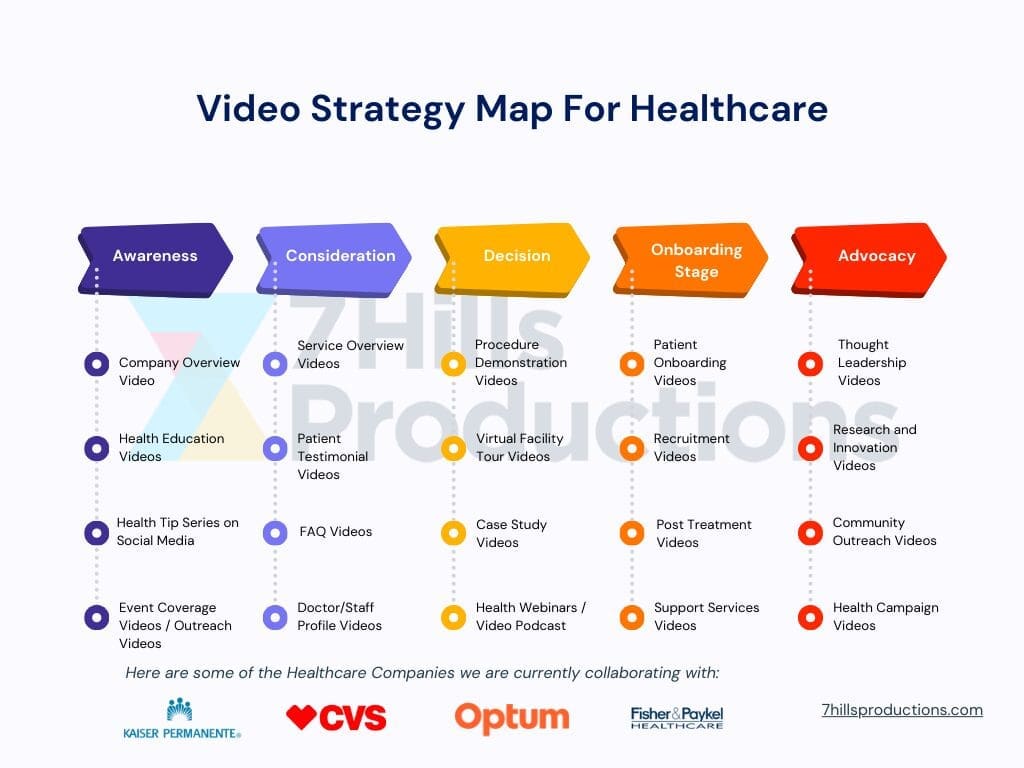
Expanding Your Reach and Accessibility With Strategic Healthcare Video Production
Expanding reach in the healthcare sector involves adopting strategies that improve accessibility and ensure that critical health information is available to a diverse patient base. Video production in healthcare not only serves as a tool for education but also plays a pivotal role in bridging the gap between healthcare providers and communities. Strategic dissemination of video content across multiple digital channels ensures that content is accessible to patients regardless of their geographic, socioeconomic, or linguistic backgrounds. According to a study from the International Journal of Healthcare Technology (2021), organizations that deploy multi-channel video strategies see a 60% improvement in audience reach and engagement compared to single-channel approaches.
Organizations focusing on strategic healthcare video production can expect improved outreach and engagement with their audience.
Improve Search Engine Visibility With Video SEO Best Practices
In an era where digital presence is a key driver of patient engagement, optimizing video content for search engines is paramount.
Incorporating healthcare video production best practices can lead to significant increases in search visibility and audience engagement.
Reach a Wider Audience Across Digital and Social Media Platforms
By leveraging multiple digital platforms such as YouTube, Facebook, Instagram, and LinkedIn, healthcare brands can distribute video content to a broader audience. This multi-channel approach ensures that videos are available where patients are most active. Social media platforms, in particular, offer the advantage of viral sharing and peer recommendations. A comprehensive distribution strategy ensures that content can be shared across networks, thus increasing overall reach and enhancing engagement rates. Video production companies like 7 Hills Productions have demonstrated how targeted video campaigns, when integrated with social media marketing, can amplify reach by over 70% in competitive markets.
Create Content Accessible to Diverse Patient Populations
Ensuring content accessibility is critical, especially in healthcare, where communication clarity can impact patient outcomes. Videos should include features such as closed captions, easy-to-read fonts, and audio descriptions to cater to patients with disabilities or those who speak different languages. Accessibility is not only a regulatory requirement under laws such as the Americans with Disabilities Act (ADA) but also a best practice that broadens the patient base. Moreover, creating videos with adaptive designs enables healthcare brands to reach an international audience, thereby enhancing patient education and global credibility.
Healthcare video production must prioritize accessibility to ensure all patient demographics are effectively reached. Ensuring content accessibility is critical, especially in healthcare, where communication clarity can impact patient outcomes.
Distribute Educational Health Information Broadly and Effectively
The broad distribution of educational content is essential for public health initiatives. Videos that cover topics ranging from routine health tips to complex procedural explanations help demystify medical information for patients. Strategic partnerships with healthcare organizations and non-profits can further extend the reach. For example, during public health crises, timely video updates distributed via various channels have proven instrumental in disseminating critical health information and recommendations. A detailed table below compares key attributes of various distribution channels used for healthcare video content:
Strategic healthcare video production can support public health initiatives by disseminating vital information broadly.
| Platform | Audience Reach | Engagement Features | Accessibility Tools | SEO Impact |
|---|---|---|---|---|
| YouTube | Global | Comments, Likes, Shares | Captions, Transcriptions | High |
| Broad demographic | Shareable posts, Live Streaming | Video captions, Alt text | Moderate | |
| Younger audience | Stories, IGTV, Reels | Subtitles, Visual filters | Moderate | |
| Professional network | Article integration, Groups | Transcripts, Links | High | |
| TikTok | Trend-driven | Short-form, Viral challenges | Captions, Interactive apps | Moderate |
This table illustrates how each platform plays a unique role in making healthcare video content accessible and engaging. The strategic use of these platforms ensures that medical information reaches the widest audience, thereby enhancing patient education and brand visibility.
Key Takeaways: – Video SEO best practices improve search engine visibility. – A multi-channel distribution strategy significantly amplifies audience reach. – Incorporating accessibility features ensures videos cater to diverse patient groups. – Broad distribution of educational health videos strengthens public health initiatives.

Achieving Measurable Marketing Goals With Healthcare Videos
Healthcare video strategies offer not only qualitative benefits but also measurable outcomes that directly impact a brand’s bottom line. The implementation of video marketing can drive higher conversion rates, increased website traffic, and improved brand recall. Data-driven strategies ensure that every video project is aligned with clear performance metrics such as engagement time, conversion rates, and patient inquiries. A recent survey by the Healthcare Marketing Report (2022) confirmed that brands employing video marketing strategies achieved a 40% higher conversion rate than those that did not utilize video content effectively.
A robust healthcare video production strategy can yield measurable results, directly impacting brand growth.
Increase Conversion Rates for Appointments and Inquiries
Videos that clearly articulate the benefits of medical services and the expertise of healthcare providers stimulate patient inquiries and appointment bookings. An effective video call-to-action (CTA) is essential in guiding prospective patients from awareness to decision. Using succinct messaging like “Schedule Your Consultation Today” and pairing it with visual cues drives immediate engagement. Data from a case study at a prominent medical device company indicated that integrating CTAs within patient education videos resulted in a 50% increase in scheduled appointments within three months.
Drive More Qualified Traffic to Your Website and Landing Pages
Quality video content enhances digital marketing efforts by attracting a well-targeted audience to healthcare websites. Videos that are optimized for user intent and search engine algorithms attract visitors who are already interested in specific treatments and services. For example, a video explaining the intricacies of a new surgical procedure can draw an audience that is more likely to convert due to prior interest. Website analytics indicate that healthcare sites with video content enjoy an average increase of 32% in qualified traffic, which translates to improved lead quality and higher conversion rates.
Enhance Recall of Your Brand and Services
Consistent exposure to professionally produced medical marketing videos helps embed a brand’s identity in the minds of patients. Videos convey not only information but also emotional context, which reinforces brand messaging and value propositions. This repetition increases the probability that potential patients will remember the brand when making healthcare decisions. High-quality visuals paired with clear, empathetic messaging promote long-term recall, making it easier for patients to trust and choose the brand when seeking care.
Healthcare video production fosters long-lasting relationships by embedding brand identity in the minds of patients.
Track Video Performance to Refine Your Marketing Approach
Continuous performance tracking is integral to optimizing a video strategy. Healthcare brands must analyze metrics such as view counts, average watch time, click-through rates (CTR), and conversion statistics to refine content and distribution strategies over time. Advanced tools, including AI-powered analytics platforms, allow marketers to segment data by demographic and behavioral parameters. This iterative process enables the identification of what content resonates best and where improvements can be made. For example, a healthcare video production agency may adjust production techniques based on the observed drop-off rates and engagement patterns, leading to incremental performance improvements over successive campaigns.
Continuous evaluation of healthcare video production strategies will ensure alignment with patient needs and preferences. Tracking video performance is integral to optimizing a video strategy.
Key Takeaways: – Videos drive higher conversion rates by guiding viewers to take action. – Optimized video content attracts qualified traffic to healthcare websites. – Consistent video messaging enhances brand recall and patient trust. – Ongoing performance tracking enables continuous refinement of video strategies.
Key Types of Medical Marketing Videos to Incorporate in 2026
Healthcare brands need to adopt a mix of video types to address the varying needs of patients and the broader digital audience. With rapid changes in technology and viewer preferences, the variety of video content required is continually evolving. In 2026, medical marketing videos will need to cater not only to patient education but also to device promotions, compliance updates, and brand storytelling. Each type of video serves a distinct purpose, from detailed procedural explanations to short, engaging health tips that capture immediate attention.
Educational Videos Explaining Conditions and Treatments
The importance of effective healthcare video production is evident in how it can clarify complex medical processes for patients.
Educational videos are crucial for demystifying conditions and treatment protocols. These videos use animation, interviews, and real-life case studies to break down sophisticated medical processes into clear, easily digestible segments. By explaining conditions such as diabetes management or post-operative care in a visual format, these educational videos empower patients with the knowledge necessary to make informed decisions. Further, by integrating graphics and motion visuals with voiceovers, educational videos ensure that complicated clinical data is communicated effectively.
Procedure Demonstration Videos to Alleviate Patient Anxiety
Procedure demonstration videos show step-by-step processes of medical interventions, easing patient anxiety by providing a clear preview of what will occur during treatment. These videos often include animated sequences, real procedure footage, and expert voiceovers to explain each stage of the procedure. For instance, a demonstration video on minimally invasive cardiac procedures can help patients understand how these techniques work, what to expect during recovery, and how complications are managed. This not only improves patient confidence but also equips them with realistic expectations prior to the procedure.
Staff Introduction Videos to Foster Connection
Staff introduction videos contribute to healthcare video production efforts by personalizing the patient experience.
Healthcare is personal, and staff introduction videos serve to humanize a facility by introducing physicians, nurses, and support staff. These videos typically feature interviews, behind-the-scenes footage, and personal narratives that highlight the qualifications and compassionate care provided by the team. By fostering a stronger connection between the staff and the patients, these videos help build trust and encourage new patients to feel confident in their care choices. A staff video produced by a reputable healthcare organization can significantly improve patient satisfaction scores.
Short-Form Videos for Quick Health Tips and Updates
Short-form videos are emerging as a critical tool for delivering rapid health tips and updates in today’s fast-paced digital environment. With platforms like Instagram Reels and TikTok dominating social media trends, healthcare brands are crafting videos that are concise yet impactful. These videos address a variety of topics—from seasonal health tips to quick explanations of new treatment options—and are designed to capture attention quickly. Their brevity and clarity make them highly shareable, increasing overall engagement and audience reach.
Live Q&A Sessions and Webinars for Real-Time Interaction
Live Q&A sessions and webinars allow healthcare brands to interact directly with their patients in real time. These sessions provide a forum for addressing common concerns, clarifying doubts, and discussing the latest medical advancements. They also facilitate an interactive experience where viewers are encouraged to ask questions and provide feedback. This direct, transparent interaction not only positions the healthcare provider as a thought leader but also contributes significantly to patient trust and satisfaction. Recorded sessions can further be repurposed as educational assets, extending their value over time.
Below is a table summarizing key attributes of various medical marketing video types:
Different types of healthcare video production serve unique purposes and fulfill various patient needs.
| Video Type | Primary Purpose | Key Features | Ideal Audience | Example Use Case |
|---|---|---|---|---|
| Educational Videos | Explain conditions and treatments | Detailed narration, animations, expert interviews | Patients seeking health information | Explaining chronic disease management protocols |
| Procedure Demonstration Videos | Alleviate anxiety surrounding complex procedures | Step-by-step process, real-time footage, voiceovers | Pre-operative patients | Demonstrating minimally invasive surgery techniques |
| Staff Introduction Videos | Build personal connection with patients | Interviews, candid footage, personal stories | New patients, community audiences | Introducing hospital medical teams |
| Short-Form Videos | Provide quick health tips and updates | Concise messaging, engaging visuals, trending formats | Social media users | Sharing seasonal flu prevention tips |
| Live Q&A Sessions & Webinars | Real-time interaction and engagement | Live streaming, interactive Q&A, expert panels | Diverse patient demographics | Hosting a live session on new treatment innovations |
Educational and procedure demonstration videos typically require a higher production budget yet provide significant engagement returns, while live Q&A sessions may be more cost-effective, using interactive digital tools to engage a broad audience.
Key Takeaways: – Diverse video types cater to different patient needs and digital platforms. – Educational videos empower patients with clear, accessible information. – Staff introduction videos humanize the brand and build trust. – Short-form videos and live sessions increase engagement by providing real-time information.
Healthcare video production must adapt to changing patient needs, ensuring that diverse formats are employed.
Utilizing advanced technologies in healthcare video production allows for innovative and engaging content creation.
Integrating Advanced Technologies Into Your Healthcare Video Production
The integration of advanced technologies in healthcare video production is revolutionizing how brands create and deliver content. Leveraging artificial intelligence, interactive video elements, and immersive 360-degree video technology, healthcare brands can produce highly engaging and personalized content that meets modern audience demands. These advanced tools not only enhance production quality but also streamline workflows, reduce production times, and offer viewers a richer, more interactive experience.
Utilize AI Tools for Efficient Video Creation and Personalization
Artificial intelligence tools have transformed the video production landscape by automating editing processes, optimizing content for search engines, and personalizing viewer experiences. AI can analyze viewer behavior and engagement metrics to tailor content that directly addresses patient interests. For healthcare brands, AI-driven video analytics allow for the rapid identification of high-performing content themes, enabling teams to quickly pivot and optimize future videos. Additionally, AI tools can assist in script writing, scene selection, and even real-time translation, ensuring that content is both accurate and accessible to a global audience.
Consider Interactive Video Elements for Deeper Engagement
Interactive video elements such as embedded quizzes, clickable hotspots, and decision trees provide viewers with a more engaging and immersive experience. These interactive features can guide patients through a personalized learning journey, allowing them to choose the content that is most pertinent to their needs. For example, an interactive video detailing treatment options for a chronic condition can let viewers select symptoms they experience, immediately leading to tailored advice and next steps. Health systems that incorporate these interactive elements have reported a 20% higher engagement rate compared to traditional linear videos, demonstrating the power of interactivity in patient education.
Explore 360-Degree Videos for Immersive Facility Tours
360-degree video technology offers an immersive way for patients to explore healthcare facilities without physically being there. These videos provide a comprehensive view of the clinical environment, empowering patients with the knowledge of what to expect during their visit. Such immersive tours can significantly reduce pre-visit anxiety, as patients gain familiarity with the facility layout and ambiance. Facilities such as surgical centers and rehabilitation clinics have successfully implemented 360-degree tours to improve patient confidence and satisfaction, proving that technology can facilitate a seamless integration of digital and real-world experiences.
Ensure High-Quality Production Values to Maintain Professionalism
While embracing advanced technologies, maintaining high-quality production values remains vital for credibility in healthcare marketing. Precision in lighting, sound, and editing combined with cutting-edge technology ensures that the final video output is both informative and visually appealing. High-quality production not only reflects the brand’s commitment to excellence but also instills confidence in viewers regarding the accuracy and reliability of the information provided. Leading healthcare video production agencies emphasize the importance of professional-grade equipment and experienced production teams to achieve the desired impact.
Maintaining high-quality standards in healthcare video production reflects professionalism and accuracy.
A comprehensive list of technologies vital for modern healthcare video production includes: – Artificial Intelligence (AI) analytics and automation tools – Interactive video software for enhanced engagement – 360-degree cameras for immersive facility tours – High-definition cameras and professional lighting equipment – Video editing software integrated with motion graphics and visual effects
Key Takeaways: – AI tools assist in efficient, personalized video creation. – Interactive elements significantly boost viewer engagement. – 360-degree videos offer immersive virtual facility tours. – High production standards reinforce brand credibility and trust.
Planning and Executing Your Successful Healthcare Video Strategy
A successful healthcare video strategy in 2026 depends on meticulous planning and a deep understanding of target audience needs. From defining strategic objectives to mapping out a comprehensive content calendar, healthcare brands must approach video production with both creative vision and analytical rigor. This section outlines the necessary steps to design a video marketing strategy that drives patient engagement, improves search engine rankings, and converts viewers to actionable patient inquiries.
Define Clear Objectives for Your Video Marketing Efforts
Before initiating any video project, healthcare brands must establish clear and measurable objectives. These objectives may range from increasing website traffic and improving patient education to boosting appointment bookings and achieving higher ROI on digital campaigns. Clearly defined goals help in selecting appropriate video types, determining production budgets, and establishing performance benchmarks. For instance, if the objective is to reduce patient anxiety before major procedures, videos should focus on transparent, step-by-step procedural explanations and testimonials. Defining objectives early in the process ensures that every element of video production—script, design, and distribution—is aligned with the overall marketing strategy.
Understand Your Target Audience’s Needs and Preferences
A deep understanding of the target audience is critical in ensuring that video content resonates effectively. Healthcare marketers must engage in audience research, which includes demographic analysis, patient feedback, and digital behavior studies. This intelligence helps in tailoring the tone, language, and complexity of the content. For patients, clarity and empathy are paramount; hence, videos must use accessible language without oversimplifying important medical details. Surveys and focus groups can provide invaluable insights into the patient journey, influencing everything from video format to distribution channels.
Develop a Content Calendar With Diverse Video Formats
Successful video strategies rely on consistency and diversity. Healthcare organizations should develop a content calendar that incorporates a variety of video formats such as educational tutorials, testimonial interviews, facility tours, and live Q&A sessions. This diversity not only keeps the audience engaged but also addresses different stages of the patient journey. A well-planned calendar ensures regular content delivery and helps coordinate video releases with broader marketing campaigns. By scheduling videos at optimal times, brands can maximize visibility and engagement on digital platforms.
Choose Appropriate Platforms for Video Distribution and Promotion
Distribution is as important as production. Healthcare brands must select platforms that align with the designated objectives and audience demographics. Major platforms such as YouTube, LinkedIn, Facebook, and Instagram each offer unique benefits; hence, a multi-channel distribution strategy is recommended. In addition, integrating videos into website landing pages, email newsletters, and patient portals can further extend reach. Video promotional strategies, including targeted advertising and SEO, ensure content is discoverable by potential patients. Data from industry reports indicate that brands using a multi-platform approach witness a significantly higher engagement rate compared to single-platform strategies.
Adhere to Healthcare Marketing Compliance and Privacy Regulations
Healthcare marketing is subject to strict regulatory guidelines to protect patient privacy and ensure accurate information dissemination. Thus, incorporating compliance checks throughout the video production process is essential. Healthcare video production teams must be aware of HIPAA, GDPR, and other relevant regulations, ensuring that no sensitive patient information is disclosed inadvertently. Utilizing secure digital tools for video editing, storage, and distribution is also critical in maintaining confidentiality and trust.
An actionable checklist for a successful video strategy includes: – Clearly define measurable objectives aligned with patient outcomes. – Conduct detailed audience research and feedback analysis. – Create a diverse content calendar incorporating different video formats. – Choose the best platforms for multi-channel video distribution. – Implement rigorous compliance protocols to uphold privacy and regulatory standards.
Key Takeaways: – Setting clear objectives is fundamental to strategy success. – Understanding audience needs informs content tone and format. – A diverse content calendar sustains audience engagement. – Strategic multi-platform distribution optimizes video reach. – Compliance with regulations is essential to maintain trust.
Effective healthcare video production strategies must also adhere to compliance standards to protect patient information.
Frequently Asked Questions
Q: How can healthcare brands measure the success of their video marketing campaigns? A: Success can be measured using key performance indicators such as conversion rates, engagement duration, click-through rates, and website traffic analytics. Tools like Google Analytics and AI-based video analytics platforms provide detailed insights that help refine marketing strategies.
Q: What role does video SEO play in healthcare marketing? A: Video SEO enhances the search ranking and discoverability of healthcare video content by optimizing metadata, descriptions, and video tags. This ensures that the videos reach a wider patient audience and drive organic traffic.
Q: Are short-form videos effective in the healthcare industry? A: Yes, short-form videos are highly effective for delivering quick health tips and updates, engaging a diverse audience on social media platforms, and supplementing longer educational content with concise, impactful messages.
Q: How do advanced technologies like AI influence healthcare video production? A: AI tools automate various aspects of video production, such as editing and analytics, which enhances personalization and viewer engagement. Furthermore, AI-driven insights help tailor content to specific audiences, leading to higher conversion rates.
Q: What are the compliance considerations for healthcare video marketing? A: Compliance involves adhering to legal regulations such as HIPAA and GDPR, ensuring the protection of patient privacy, and maintaining the accuracy of medical information. Regular audits and secure production practices are essential to meet these standards.
Q: How often should healthcare brands update their video content? A: Regular updates are recommended to keep up-to-date with advancements in medical research and technology. Typically, refreshing content every six to twelve months helps maintain engagement and relevance in a fast-evolving digital landscape.
Final Thoughts
Ultimately, healthcare video production is vital for effective communication and trust-building in the healthcare landscape.
Video marketing in healthcare is no longer optional; it is a fundamental element for building trust, educating patients, and driving measurable results.
Emphasizing healthcare video production within marketing strategies ensures that patient needs and preferences are met.



Really appreciate the interesting content on betting.
Big Bass Splash iOS version