Trade Show, Conference, and Expo Video Production Guide for Marketing Teams
How to choose the right event video production partner, capture more value from your booth and speakers, and turn one live event into a content library for sales, social media, recruiting, and brand growth.
Executive Summary
Trade shows, conferences, and expos move fast. Your team may spend months preparing the booth, presentation, sponsorship, product launch, travel, and sales strategy, yet many brands still underuse the most valuable part of the event: the content. Professional event video production helps marketing teams capture the momentum of a live event and turn it into assets that keep working long after the doors close.
This guide explains what to look for in a trade show and conference video production company, how pricing and timelines usually work, how to think about interviews, speaker coverage, booth footage, and editing, and how to choose a partner that can help your team get more measurable value from every event.
1. Why Event Video Matters More at Trade Shows, Conferences, and Expos
Trade show and conference marketing is expensive. Booth design, sponsorships, travel, print materials, speaking opportunities, shipping, staffing, and event registration all add up quickly. Because the investment is significant, every event should create more than a few days of visibility. That is where event video becomes one of the highest leverage tools in the entire event plan.
A strong event video strategy helps your team extend the life of the show. Instead of the event ending when the floor closes, your company walks away with booth footage, speaker highlights, customer interviews, social clips, branded b roll, recap videos, and proof of market presence. These assets can support post event follow up, sales outreach, future event promotion, recruiting, and ongoing brand content.
For trade shows, conference marketing, and expo coverage, video does more than document the event. It proves that your brand showed up well, attracted attention, engaged the market, and had something worth capturing. That matters for prospects, partners, investors, and internal stakeholders.
This is also why event content often overlaps with broader services like event video production, testimonial video production, corporate video production, and promotional video production. One event can fuel multiple parts of your marketing system if the coverage is planned correctly.
2. What Great Trade Show and Conference Coverage Includes
Not all event coverage is equally valuable. A weak event video may show the room, the crowd, and a few logo shots, but still miss the real story. Great conference and expo coverage should capture both atmosphere and business value.
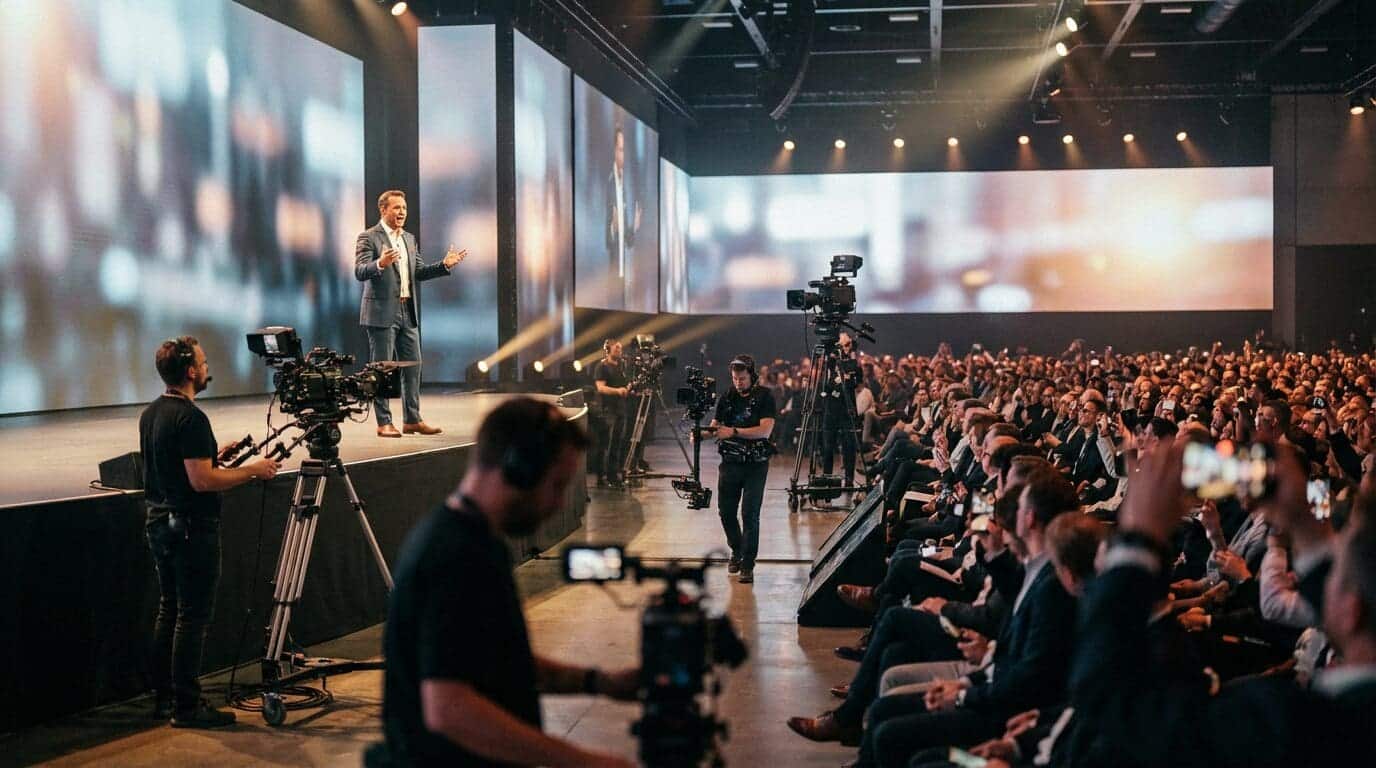
For most events, the highest value coverage includes booth activity, product demonstrations, crowd interaction, stage moments, keynote or panel clips, sponsor moments, networking scenes, executive or customer interviews, branded signage, and strong detail shots that make the event feel alive and high quality.
The best teams also understand what not to miss. If your company is launching a product, the launch moment needs to be captured with intention. If your booth is generating traffic, that must be documented in a way that looks energetic and credible. If leadership is speaking, the team needs clean audio and clear framing. If clients are available for interviews, those windows need to be prioritized before the event gets too busy.
| Coverage Element | Why It Matters | Best Future Use |
|---|---|---|
| Booth traffic and demos | Shows market interest and real engagement | Sales, website, future event promotion |
| Speaker and panel moments | Builds authority and thought leadership | LinkedIn, email follow up, press |
| Customer interviews | Creates social proof | Testimonials, case study edits, ads |
| Crowd and venue visuals | Adds scale and energy | Recaps, event promos, brand content |
| Brand signage and product visuals | Makes the footage feel owned by your company | Recaps, landing pages, social clips |
A conference video partner should know how to balance all of these elements without making the final edit feel cluttered. That is where experience matters.
3. How to Evaluate a Trade Show and Conference Video Production Company
The first thing to review is experience. A strong portfolio tells you whether the production company knows how to work in fast moving live environments. Event work is different from a controlled interview shoot. Teams must be able to adapt quickly, capture clean visuals in crowded spaces, manage audio challenges, and still build a final edit that feels polished and intentional.
Look at whether their portfolio includes trade shows, conferences, expos, keynotes, interviews, and fast turnaround event recaps. Review how they capture booth activity, audience engagement, product visuals, and speaker moments. Do the final videos feel cinematic but still clear. Do they understand what matters most from a marketing point of view.
You should also evaluate communication style. A strong event production partner should ask smart questions before the show, clarify the priority deliverables, understand your schedule, and help you identify the moments that matter most. That kind of collaboration often affects the final result as much as camera quality.
For companies that attend multiple events per year, it also helps to choose a team that can work with you long term. A production company that already understands your booth goals, messaging, brand tone, and executive team will work more efficiently at future events and build a much more useful event footage library over time.
Questions to Ask Before Hiring
What kinds of trade shows and conferences have you covered recently?
How do you prioritize booth footage, interviews, and speaker moments during a busy event?
What does your turnaround process look like for recap edits and social clips?
Can you support both event recap content and testimonial or interview content from the same show?
How do you manage communication before, during, and after the event?
4. Cost Factors and Budget Planning for Expo and Conference Video Production
Pricing for event video production can vary widely depending on the size of the event, the crew needed, the number of coverage days, the complexity of the edit, and how many deliverables you want afterward. What matters most is not the cheapest quote. It is whether the structure of the quote helps you get the right coverage and the right assets.
For example, a simple one camera recap is very different from a trade show package that includes booth coverage, interviews, social clips, and a polished highlight film. Companies that exhibit often benefit more from a slightly larger but smarter package because it creates more usable content after the show.
| Cost Factor | What Changes the Price | How to Keep It Efficient |
|---|---|---|
| Event duration | Half day, full day, or multi day coverage | Prioritize must have moments and interview windows |
| Crew size | Single operator versus multi camera team | Match crew to deliverables, not just event size |
| Interview setup | Lighting, audio, backdrop, and quiet space needs | Prebook interview windows and locations |
| Post production | Recap only versus multiple cutdowns and versions | Decide deliverables before the event |
| Travel and logistics | Flights, hotels, permits, and load in complexity | Use a team familiar with the venue and event type |
A transparent quote should show what is included, what is optional, and what kinds of edits or deliverables are part of the package. This makes it easier to compare vendors properly and helps the marketing team plan for real ROI instead of just coverage.
5. Timelines, Turnarounds, and Event Day Logistics
Conference and expo footage is often most valuable immediately after the event while the audience still remembers the brand, the topic, and the atmosphere. That means speed matters. A strong production partner should be able to define what can realistically be turned around in one day, one week, or a longer post production window.
For most trade show marketing teams, there are usually three timing priorities. First, fast social clips for same day or next day posting. Second, a polished recap that can be used within days after the show. Third, a fuller set of interview or speaker assets that can be edited and released over time.
Good event logistics also start before the crew arrives. The production team should know the event schedule, speaking times, booth priorities, interview targets, credential rules, audio access, and any venue limitations. If those details are ignored, the day becomes reactive and the most valuable moments are often missed.
6. Interviews, Testimonials, and Booth Storytelling
One of the best reasons to bring a production team to a trade show or conference is access. Your clients, partners, executives, and industry leaders are all in one place. That creates rare opportunities for interviews and testimonials that may be difficult to schedule later.
Booth interviews can become powerful post event assets. A customer speaking on camera about why they use your product can fuel your website, social channels, and future campaigns. A leadership interview can support thought leadership. A booth walkthrough can become a quick product context video. All of these assets extend the life of the event.
This is where event coverage connects naturally to interview video production, product video production, and broader brand video production. A good team will plan for those overlaps instead of only creating one recap.
High Value Interview Subjects at Trade Shows and Conferences
Customers who can speak to outcomes and real results
Executives who can frame the market and your company position
Product leaders who can explain what is new or important
Partners who can add credibility and context
Speakers who can reinforce thought leadership after the event
7. Post Production, Editing, and Content Repurposing
The event itself may last a few hours or a few days. The editing is what determines how much long term value your team gets from it. A strong editor does not just assemble footage. They shape a story, pace the energy, balance branding with authenticity, and create multiple cuts that fit different channels.
For event content, repurposing matters as much as the main recap. A good team can turn the same footage into a trade show highlight reel, LinkedIn clips, speaker pull quotes, customer testimonial edits, vertical video versions, booth teasers, and future event promos. That is often where the real return is.
This is also why the post production capabilities of a video partner matter so much. If the editing is weak, the footage may still look like documentation instead of strategic marketing content. If the editing is strong, your team gets a full content package instead of one recap.
8. How to Measure Event Video ROI
A strong event video should not be judged only by how good it looks. It should also be judged by how useful it becomes. For marketing teams, return usually comes from several places: event recap views, social engagement, post event sales support, website content, future event promotion, sponsor proof, and long term content reuse.
The most useful question is not “Did we get a nice recap?” It is “How many assets did we create, where did we use them, and what did they help us do?” If the footage helped close deals, warm leads, prove event ROI internally, or support content for months, then the production was doing far more than documenting a room.
| ROI Category | What to Track | Why It Matters |
|---|---|---|
| Post event engagement | Views, comments, shares, saves | Shows content relevance and attention |
| Sales enablement | Use in outreach and follow up | Extends trade show impact into pipeline |
| Content library growth | Number of usable clips and edits | Improves long term marketing value |
| Future event promotion | Use in next year’s promotion | Lowers future campaign costs |
9. Quick Comparison Tables and Checklists for Marketing Teams
What to Look for in a Trade Show and Conference Video Team
| Attribute | Why It Matters | What Strong Teams Show |
|---|---|---|
| Relevant portfolio | Shows event specific experience | Trade show, expo, and conference samples |
| Clear pricing | Helps protect budget and scope | Itemized quote and clear deliverables |
| Fast communication | Events move quickly and change fast | Responsive planning and event day coordination |
| Editing strength | Turns footage into actual marketing assets | Recaps, cutdowns, interview edits, social clips |
| Strategic mindset | Creates more long term value | Knows how to capture content for reuse |
Pre Event Checklist
Finalize your priority deliverables before the show
Identify key speakers, interviews, and booth moments
Share the event schedule and floor plan with the crew
Reserve quiet interview windows if needed
Confirm turnaround expectations for recap and social clips
Decide how the footage will be reused after the event
Frequently Asked Questions
What should I look for in a trade show or conference video production company?
Look for a team with real event experience, a strong portfolio, clear communication, transparent pricing, and editing capabilities that go beyond one recap video. You want a team that understands both event coverage and marketing value.
How much does conference or expo video production usually cost?
Pricing varies based on crew size, coverage days, interview needs, travel, and post production scope. The most useful quotes are the ones that clearly show what deliverables are included and what optional additions are available.
What is a realistic turnaround time for event video content?
Many marketing teams need a mix of quick social clips, a recap within days, and a broader set of interview or speaker assets later. A good production partner should explain what can be delivered at each stage.
Can one trade show create multiple useful videos?
Yes. A well planned event can produce a recap, booth video, customer testimonials, speaker highlights, social clips, and future event promo material from the same coverage.
Why are event interviews so valuable?
Because trade shows and conferences gather customers, partners, executives, and industry leaders in one place. That makes it much easier to capture authentic interviews and testimonial content that can be repurposed across your marketing.
How do I know if the event video investment paid off?
Measure how the content was used after the event. If it supported social engagement, sales follow up, internal reporting, sponsor visibility, or future event promotion, then it likely generated more value than a recap alone.